


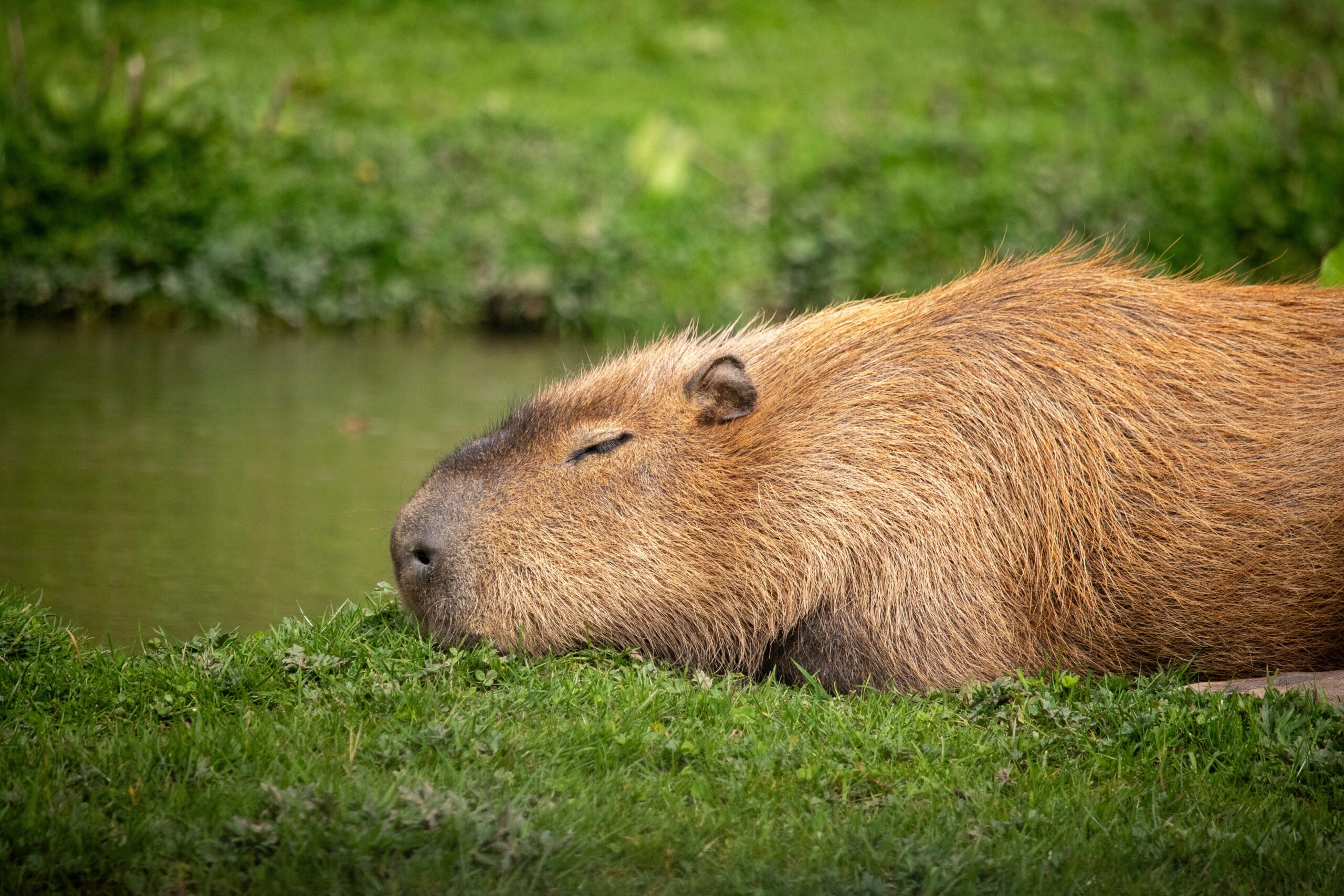
Meet the cadibara — the gentle, barrel-shaped creature taking the internet by storm. Part real wildlife wonder, part viral meme legend, this animal is more fascinating than you might think.
If you’ve been scrolling through social media lately, there’s a good chance you’ve stumbled across the word cadibara. Some people spell it differently, others use it as a meme caption, and a surprising number want to know: what exactly is a cadibara?
The short answer? A cadibara is another name — often used online — for the capybara, the world’s largest living rodent. But behind that funny internet spelling is one of nature’s most extraordinary animals: a calm, social, semi-aquatic giant that has captured hearts across the globe. According to the IUCN Red List, the capybara is currently classified as Least Concern, making it one of the more stable large mammals in South America. Let’s dive in.
Where does the word “cadibara” come from?
The term cadibara is widely understood as a phonetic or playful variation of the word capybara. Internet culture has a long history of reshaping animal names — think “doggo,” “birb,” or “bepis” — and cadibara fits right into that tradition. It sounds softer, slightly musical, and oddly charming. Searches for “cadibara” have surged globally as capybara memes went viral on TikTok, Reddit, and Instagram. While scientists and wildlife guides stick to capybara, the internet has firmly adopted cadibara as its own.
| The cadibara is not a separate species. It refers to the capybara — Hydrochoerus hydrochaeris — the same remarkable creature that holds the title of the largest rodent on Earth. |
Quick facts: what makes the cadibara special?
| Fact | Value |
| Max Adult Weight | 66 kg |
| Body Length | Up to 1.3 m |
| Typical Group Size | 10–20 individuals |
| Wild Lifespan | 6–8 years |
Where do cadibaras live?
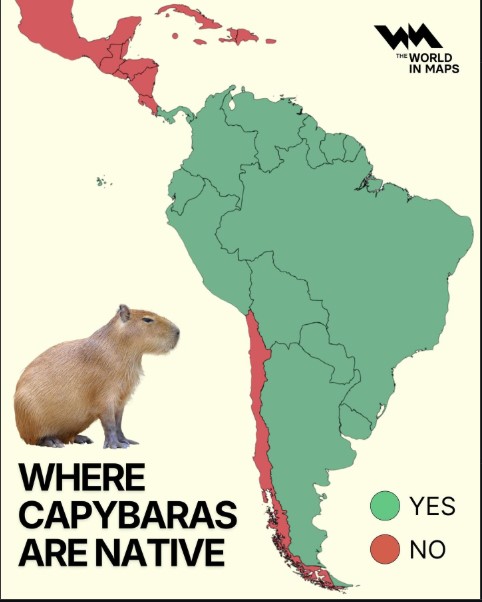
Cadibaras are native to South America, found across Brazil, Venezuela, Colombia, Argentina, Paraguay, and Peru. They are never far from water. Their entire lifestyle revolves around wetlands, riverbanks, marshes, and flooded grasslands — environments that provide food, cooling shade, and protection from predators.
Because of their semi-aquatic nature, cadibaras are rarely spotted far from a river or lake. Water isn’t just a convenience for them — it’s a survival tool. When threatened, they plunge in and can hold their breath for up to five minutes.
What does a cadibara eat?
Cadibaras are strict herbivores. Their diet consists mainly of grasses, aquatic plants, reeds, and the occasional fruit or vegetable. An adult cadibara can consume up to 3 kilograms of plant material per day. They also practice a behaviour called coprophagy — eating their own droppings — to extract maximum nutrition from tough, fibrous plants. Yes, it sounds odd, but it’s a highly efficient digestive strategy common in many herbivores.
Social life: the most chill animal on the planet?

Perhaps the most famous thing about the cadibara is its legendary chill. These animals are deeply social, living in structured groups of 10 to 20 individuals — sometimes growing to 40 or more in areas with plentiful food and water. Groups are typically led by one dominant male, with several females, young pups, and subordinate males.
What truly sets the cadibara apart is its peaceful coexistence with other species. Birds perch on their backs. Monkeys use them as resting spots. Even caimans and turtles have been photographed lounging beside them. The cadibara is, by most measures, the friendliest large animal in the wild.
They communicate through an impressive range of sounds: whistles, chirps, barks, and soft purring noises, each serving a specific social function — from warning calls to expressions of contentment.
Physical adaptations that make the cadibara a survival pro
- Barrel-shaped body — allows effortless floating and stability in water
- Webbed feet — slight webbing between toes aids swimming and movement in muddy terrain
- High-set eyes, ears, and nostrils — positioned on top of the head so the cadibara can stay mostly submerged while still sensing its surroundings
- Coarse, water-resistant fur — dries quickly and protects in wet, humid environments
- Continuously growing incisors — allow constant grazing on tough grasses and fibrous plants
Why did the cadibara go viral?
The cadibara’s rise to internet fame isn’t accidental. In the early 2020s, videos of capybaras sitting serenely while birds perched on their heads or other animals crowded around them spread rapidly across social platforms. People projected their own longing for peace and stillness onto the cadibara — an animal that genuinely seems unbothered by the chaos around it. Meme pages, plushie accounts, and even original songs emerged. The alternative spelling “cadibara” stuck because it feels endearing and approachable, perfectly matching the animal’s personality.
Conservation status
The cadibara is currently classified as Least Concern by the IUCN, meaning it is not endangered. However, that doesn’t mean it faces no threats. Habitat loss through wetland destruction, hunting for meat and leather in some regions, and human-wildlife conflict are ongoing pressures. Ecotourism has emerged as a positive alternative — allowing people to observe and appreciate cadibaras in the wild without harming them or their ecosystems.
Frequently asked questions about the cadibara
Is “cadibara” the correct spelling?
No — the scientifically correct name is capybara. “Cadibara” is a popular informal and phonetic variation that spread through internet culture and meme communities.
Can a cadibara be kept as a pet?
It’s extremely difficult. Cadibaras have complex social, dietary, and habitat needs — they require large bodies of water, open space, and companionship with their own kind. Some regions also have laws restricting ownership of exotic animals.
Are cadibaras dangerous to humans?
Generally, no. Cadibaras are calm herbivores with little natural aggression toward humans. However, like all wild animals, they should be treated with respect and distance in their natural habitat.
How long do cadibaras live?
In the wild, cadibaras typically live 6 to 8 years. In captivity, where they are protected from predators and disease, they can live up to 12 years.
What is the cadibara’s scientific name?
The cadibara’s scientific name is Hydrochoerus hydrochaeris. It belongs to the family Caviidae, making it a relative of guinea pigs.
Whether you discovered this animal through a funny meme or a wildlife documentary, the cadibara — the world’s largest rodent — is undeniably one of nature’s most endearing creatures. Calm, social, and perfectly adapted to life near water, it has earned its place as both a wildlife icon and an internet legend.
