


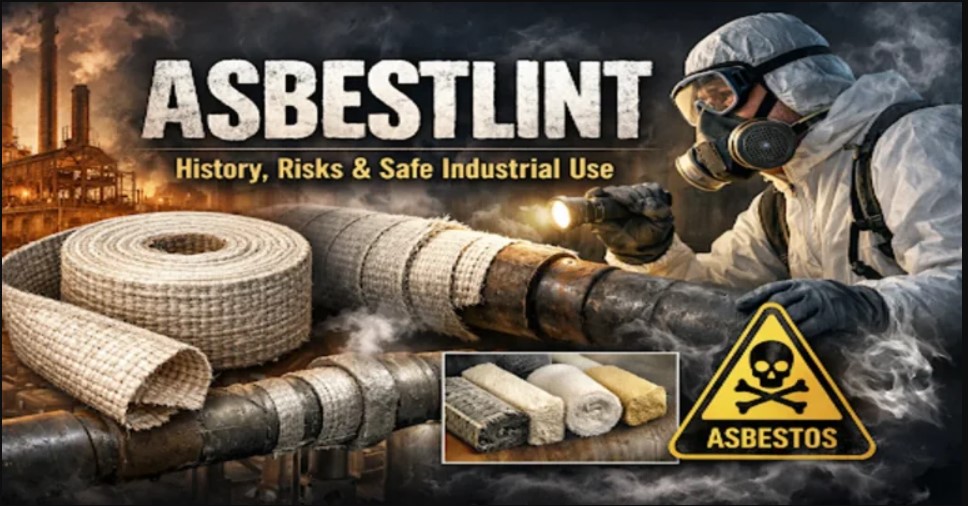
Asbestlint is one of the most underestimated health hazards hiding in older buildings today. Most homeowners have heard of asbestos — but very few know what asbestlint is or that it may already be present in their pipes, ceilings, and walls. If your property was built before 1980, this invisible, fibrous threat could be closer than you think.
What Is Asbestlint? (And Why Should You Care)
Asbestlint is a term that blends two words — asbestos and lint — to describe the microscopic, airborne fibrous dust released from asbestos-containing materials (ACMs) as they age, crack, or are physically disturbed. Like fabric lint, asbestlint particles float in the air. Unlike fabric lint, each fiber is a potential health catastrophe. The World Health Organization (WHO) classifies all forms of asbestos as carcinogenic to humans, meaning there is no safe level of exposure.
Asbestlint was also a physical product: a flexible, asbestos-based tape used by builders and engineers throughout the 20th century to insulate hot pipes, boilers, steam lines, and industrial machinery. It was cheap, heat-resistant, and incredibly durable — which is exactly why it is still found in so many buildings today.
Is asbestlint the same as asbestos?
Not exactly. Asbestos is the raw mineral. Asbestlint refers specifically to the fine, lint-like dust and fibrous particles that shed from asbestos-containing materials over time. Think of asbestlint as the active hazard — the form of asbestos that enters the air and your lungs.
Why Was Asbestlint So Widely Used?
To understand why asbestlint was everywhere, you need the historical context. From the 1920s through the late 1970s, asbestos-based materials were considered a modern engineering marvel. Asbestlint tape, in particular, offered a combination of properties that no other affordable material could match:
• Exceptional heat and fire resistance
• Flexibility — easy to wrap around pipes and complex shapes
• Chemical and moisture resistance
• Low cost and mass availability
• Long service life — lasting decades without replacement
Millions of workers installed asbestlint without any protective equipment. It was used in homes, schools, hospitals, factories, and ships worldwide. The health consequences were not fully understood until decades later — by which time the damage was already done.
The Health Risks of Asbestlint Exposure
The danger of asbestlint begins the moment its fibers become airborne. Once inhaled, these needle-like particles travel deep into lung tissue — where the body cannot remove them. Over time, they cause irreversible damage. The key diseases linked to asbestlint exposure include asbestosis, mesothelioma, and lung cancer. According to the U.S. Environmental Protection Agency (EPA), there is no safe level of asbestos exposure:
• Asbestosis: A progressive, chronic lung disease caused by internal scarring. Symptoms include persistent cough, breathlessness, and fatigue. There is no cure.
• Mesothelioma: A rare, aggressive cancer affecting the lung lining or abdomen. It has a latency period of 20 to 50 years — meaning symptoms appear long after exposure.
• Lung cancer: Asbestlint exposure significantly raises lung cancer risk, especially in smokers. Inhaled fibers trigger cell mutations over time.
• Pleural disorders: Thickening, plaques, or fluid buildup around the lungs, causing chest pain and reduced breathing capacity.
Secondary exposure: a hidden risk
Family members of workers who handled asbestlint have been diagnosed with asbestos-related diseases. The World Health Organization (WHO) confirms that all forms of asbestos are carcinogenic to humans, with no established safe limit, simply from contact with contaminated clothing. Fibres travel home on jackets, shoes, and hair. Even people who never entered a factory can be affected.
Where Is Asbestlint Commonly Found?
If your home or workplace was built before 1980, asbestlint may be present in several areas. Common locations include:
• Pipe insulation in basements, boiler rooms, and utility spaces
• Ceiling tiles and textured “popcorn” plaster finishes
• Vinyl floor tiles and the adhesive beneath them
• Roof shingles and felt underlays
• Attic insulation (especially vermiculite-based products)
• Around furnaces, water heaters, and old ductwork
• Fireproofing spray applied to structural steel beams
Important: asbestlint that is intact and undisturbed poses a lower immediate risk. The danger spikes dramatically when materials are damaged or disturbed during drilling, sanding, cutting, or demolition work.
How to Identify Asbestlint in Your Home
You cannot identify asbestlint by looking at it. The fibers are microscopic, and asbestlint-containing materials often appear identical to safe insulation. The only reliable method is professional laboratory testing.
A certified asbestos inspector will collect samples from suspected materials following strict safety protocols and send them to an accredited laboratory. Do not attempt to collect samples yourself — disturbing the material releases fibers immediately.
What does asbestlint look like?
Visually, asbestlint tape appears as a grey or white fibrous wrapping around pipes. Deteriorated material may look crumbly, frayed, or dusty. If you see old pipe insulation that is crumbling or flaking, treat it as a potential asbestlint hazard and do not touch it.
What to Do If You Suspect Asbestlint
If you suspect asbestlint in your property — especially before renovation work — follow these critical steps immediately:
1. Stop all work. If you have disturbed old materials, stop immediately and leave the area.
2. Do not touch it. Intact asbestlint may be safer to leave in place than to disturb.
3. Hire a certified inspector. Only accredited professionals should collect and test samples. The Centers for Disease Control and Prevention (CDC) recommends consulting a licensed inspector before any renovation work in pre-1980 buildings.
4. Use licensed removal specialists. Never attempt DIY asbestlint removal. Professionals use full containment and approved disposal procedures.
5. Improve ventilation. Use HEPA-filter air purifiers alongside clean energy solutions like solar panels to create a healthier, safer home environment overall.
Frequently Asked Questions About Asbestlint
Q: Is asbestlint dangerous if left undisturbed?
A: Generally, asbestlint that is intact and not crumbling poses a lower immediate risk. However, it should be professionally assessed, as condition can change over time.
Q: Can I remove asbestlint myself?
A: No. DIY asbestlint removal is dangerous and often illegal. Always use a licensed asbestos abatement professional who follows government safety regulations.
Q: How much does asbestlint removal cost?
A: Costs vary depending on location and the amount of material involved. A small residential job can range from a few hundred to several thousand dollars. Always get multiple quotes from certified specialists.
Q: Does asbestlint affect property value?
A: Yes. Unresolved asbestlint or asbestos issues can reduce market value and deter buyers. This connects to a shift in how people think about home ownership — where safety and experience now matter more than property acquisition alone. Professional removal and a clean inspection report can restore confidence and value.
The bottom line
Asbestlint is a silent hazard. You cannot see it, smell it, or feel it — but its long-term effects can be devastating and irreversible. If your property was built before 1980, do not wait for symptoms. Have it professionally inspected, stay informed, and act responsibly. Awareness is the first and most powerful step toward protecting your familyAwareness is the first step. Taking time to sit back, observe, and act mindfully applies just as much to home safety decisions as it does to everyday life.
